How Long Do Asphalt Shingles Last on the Gulf Coast?
National averages say 20-30 years. On the Gulf Coast, expect 15-22 years for architectural and 12-17 for 3-tab. Here's why.
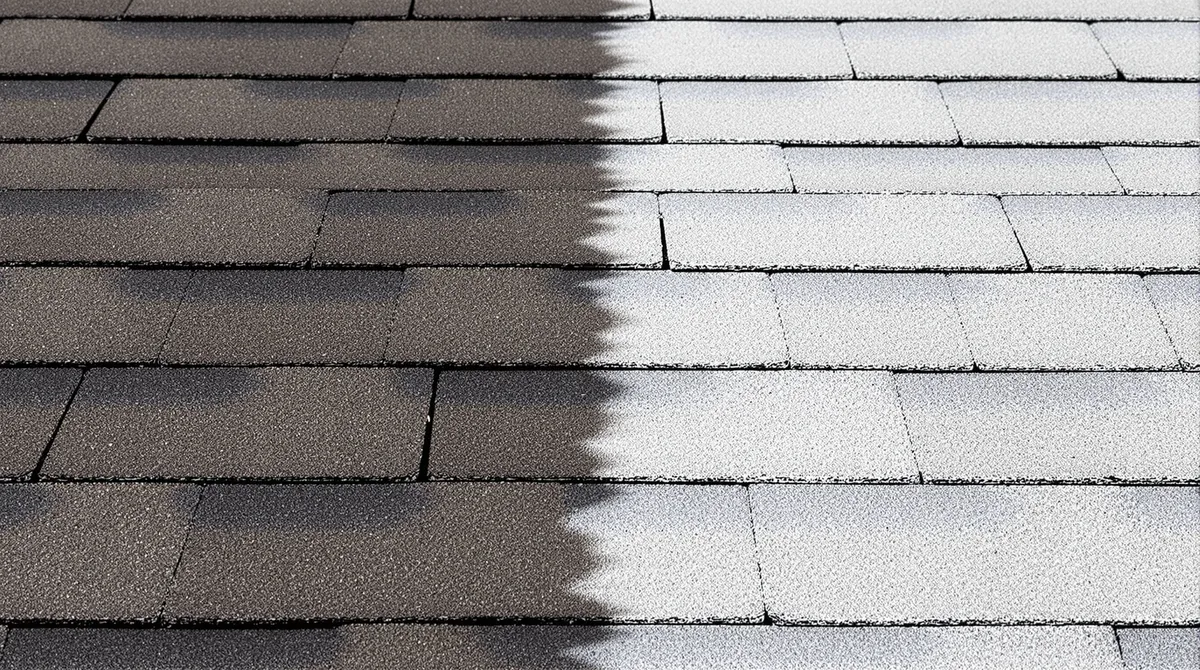
National roofing guides say asphalt shingles last 20-30 years. That number means almost nothing on the Gulf Coast. The combination of UV intensity, humidity, thermal cycling, and hurricane exposure compresses those timelines by 15-25%. Architectural shingles realistically deliver 15-22 years on coastal properties and 20-25 years inland. 3-tab shingles run 12-17 years coastal and 15-20 years inland. Plan around those numbers, not the warranty.
What you'll learn
- Realistic 3-tab vs architectural shingle lifespans for the Gulf Coast
- How UV, humidity, wind, and thermal cycling degrade shingles over time
- Interactive degradation simulator showing how damage accumulates by year
- Visual signs that your shingles are reaching end of life
- When to start planning and budgeting for replacement
3-Tab vs Architectural: The Gulf Coast Numbers
3-tab and architectural shingles are fundamentally different products that share a name. 3-tab shingles are a single layer of asphalt-coated fiberglass with ceramic granules. Architectural shingles (also called dimensional or laminate shingles) bond two or more layers together, creating a thicker, heavier, more wind-resistant product. That construction difference translates directly to lifespan, especially under Gulf Coast conditions.
3-Tab Shingle Lifespans
- Manufacturer rated: 20-25 years
- Gulf Coast inland (Mobile, Hattiesburg, Dothan): 15-20 years
- Gulf Coast coastal (Pensacola Beach, Gulf Shores, Biloxi): 12-17 years
- Wind rating: 60-70 mph (below hurricane threshold)
- Typical installed cost: $7,000-$12,000 (1,500 sq ft roof)
3-tab shingles are the most vulnerable roofing material on the Gulf Coast. Their single-layer construction means less mass to resist wind uplift, less material to absorb UV before the fiberglass mat is exposed, and a lower adhesive strip bond strength. Once the adhesive weakens — and it will, faster here than anywhere else in the country — individual tabs lift and tear off in winds that would not affect architectural shingles.
Architectural Shingle Lifespans
- Manufacturer rated: 25-30 years (some premium lines claim 50 years)
- Gulf Coast inland: 20-25 years
- Gulf Coast coastal: 15-22 years
- Wind rating: 110-130 mph (meets hurricane code in most jurisdictions)
- Typical installed cost: $10,000-$18,000 (1,500 sq ft roof)
Architectural shingles outperform 3-tab in every measurable category. The laminated construction provides more physical mass to resist wind, more granule depth to absorb UV, and a wider adhesive strip for a stronger seal. On the Gulf Coast, the wind rating alone makes architectural shingles the minimum responsible choice. Most updated Florida and Alabama building codes effectively require them through wind-speed provisions.
Your roof needs full replacement and you are deciding between 3-tab ($9,000 installed) and architectural ($14,000 installed) for your Mobile, Alabama home. Which is the better investment?
Reveal answer
Architectural. Mobile is Gulf Coast inland, so 3-tab gives you 15-20 years at $9,000 (roughly $514/year at the midpoint) and architectural gives you 20-25 years at $14,000 ($622/year at the midpoint). The per-year cost is slightly higher, but architectural shingles carry a 110-130 mph wind rating vs 60-70 mph for 3-tab. In Mobile — which sees hurricane-force winds every few years — the wind resistance is not optional. And you avoid a full replacement cycle 5-8 years sooner.
Gulf Coast Climate Degradation Simulator
This simulator shows how four climate factors accumulate damage over time on Gulf Coast asphalt shingles. Drag the slider to see how degradation progresses year by year. The patterns are based on accelerated weathering studies and field data from Gulf Coast roof inspections.
Why the Gulf Coast Cuts 15-25% Off the Warranty
Asphalt shingles are petroleum-based products, and petroleum degrades under UV radiation. This is not a defect — it is basic material science. The granules embedded in the top surface are the primary UV defense. Once they are lost (through rain impact, wind abrasion, and normal weathering), the underlying asphalt degrades exponentially faster. On the Gulf Coast, granule loss starts sooner and accelerates faster than in moderate climates.
Thermal cycling is the silent killer. A dark asphalt shingle in July in Pensacola can reach 170 degrees by 2 PM and cool to 80 degrees by midnight. That is a 90-degree swing. Multiply that by 180+ days per year for the duration of the roof's life. Each cycle expands and contracts the material microscopically. Over thousands of cycles, cracks develop, sealants fail, and the shingle becomes brittle. This is why Gulf Coast shingles curl and crack while northern shingles may simply fade.
Humidity does more damage than most homeowners realize. Persistent moisture above 70% promotes algae colonies (Gloeocapsa magma) that appear as dark streaks on the roof. These colonies are not just cosmetic — they hold moisture against the shingle surface, accelerating granule detachment and creating conditions for moss growth in shaded areas. Algae-resistant shingles help but do not eliminate the problem.
Wind stress compounds over time. Each thunderstorm and tropical system flexes shingle edges and tests adhesive bonds. The shingles do not snap back to perfect position — each event leaves residual stress. After a decade of Gulf Coast storm exposure, adhesive bond strength can drop 30-50% from its original rating. This is why shingles that "survived" every storm for 15 years suddenly blow off in a moderate thunderstorm.
Signs Your Asphalt Shingles Are Reaching End of Life
Roofs rarely fail all at once. They show warning signs for 2-5 years before catastrophic failure. Knowing what to look for gives you time to plan and budget rather than reacting to an emergency.
Granule Loss in Gutters
Check your gutters and downspout discharge areas after heavy rain. Some granule loss is normal in the first year after installation. After that, increasing granule accumulation means the shingles are shedding their UV protection faster than intended. When you see sand-like material consistently piling up in gutters, the shingles are in decline. This is usually the first visible sign, appearing 2-4 years before more obvious symptoms.
Curling or Buckling
Shingle edges that curl upward or downward indicate moisture infiltration and material fatigue. On the Gulf Coast, curling typically starts on south and west-facing slopes where UV and heat exposure are greatest. Once shingles curl, they catch wind more easily, lose their water-shedding overlap, and cannot be flattened back. Curling across multiple areas means the roof is systemically failing.
Cracking and Brittleness
Thermal cycling makes old shingles brittle. If you can see cracks from the ground, or if shingles break rather than flex when handled, the material has lost its plasticity. Brittle shingles shatter in hail and break under foot traffic — which means any repair attempt risks damaging the surrounding shingles. Widespread brittleness is a replacement indicator, not a repair indicator.
Dark Streaks and Moss Growth
Algae streaking is not just cosmetic on the Gulf Coast. Dense algae colonies hold moisture against the surface for hours after rain stops. In shaded areas, this creates conditions for moss, which roots into the shingle surface and accelerates deterioration. Cleaning helps temporarily, but if the roof is past 70% of its lifespan, the underlying material is already compromised.
Multiple Missing Shingles Without a Major Storm
When shingles detach in ordinary weather, the adhesive system has failed. A hurricane removing shingles is expected. A Tuesday afternoon thunderstorm removing shingles is a red flag. Adhesive failure is systemic — if it has failed in one area, it is failing everywhere. The remaining shingles are held on primarily by nails, which cannot prevent wind-driven rain infiltration without the adhesive seal.
When to Start Planning Replacement
The right time to plan is when your roof crosses 60% of its adjusted lifespan. For a Gulf Coast architectural shingle roof, that is around year 13-15. For 3-tab, it is around year 9-12. At this point, you are not replacing anything yet — you are starting to budget, researching contractors, and increasing your monitoring frequency.
Replacement Timeline: Architectural Shingles, Coastal FL
Adjusted lifespan: 15-22 years (midpoint: 18.5 years)
Planning trigger (60%): Year 11
Active budgeting starts: Year 11-12
Get estimates and select contractor: Year 14-15
Target replacement window: Year 16-18
Estimated cost: $14,000-$18,000
If storm damage accelerates the timeline, your savings still covers a significant portion of the cost.
Do not wait for failure. A planned replacement lets you choose your contractor, negotiate pricing during the slower winter months, and potentially upgrade to a higher-wind-rated system. An emergency replacement after a hurricane means higher prices, limited contractor availability, and pressure to accept whatever is available.
Use our Remaining Life Estimator for a personalized timeline based on your specific roof details.
Your 18-year-old architectural shingle roof in Panama City has visible granule loss, algae streaking on the north slope, and two shingles that blew off in a recent storm. The rest of the roof looks 'okay' from the ground. How would you assess this roof?
Reveal answer
This roof is at 82-120% of its coastal Gulf Coast adjusted lifespan (15-22 years). The granule loss indicates UV protection is failing. Algae streaking confirms moisture retention. Two shingles lost in a non-hurricane event suggests adhesive failure is underway. 'Looks okay from the ground' is misleading — these three symptoms together mean the roof is in its final years. Start replacement planning immediately. Budget for replacement within 1-3 years.
Frequently Asked Questions
- How long do architectural shingles last in Florida?
- On the Florida Gulf Coast, architectural shingles typically last 15-22 years for coastal properties and 20-25 years inland. These are significantly shorter than the 25-30 year national average. The reduction is driven by UV intensity, hurricane exposure, humidity, and — for coastal homes — salt air corrosion of nails and flashings.
- Are 3-tab shingles worth installing on the Gulf Coast?
- Rarely. The cost difference between 3-tab and architectural shingles is typically $1,500-$3,000 for a full roof, but architectural shingles last 5-8 years longer in our climate and carry much higher wind ratings (110-130 mph vs 60-70 mph). On the Gulf Coast specifically, the wind rating alone justifies the upgrade. Most insurance companies also give better rates for architectural shingles.
- What kills asphalt shingles the fastest on the Gulf Coast?
- UV radiation is the primary degradation driver, followed closely by thermal cycling. UV breaks down the asphalt binder that holds granules in place. Once granules are lost, the exposed asphalt degrades exponentially faster. Thermal cycling — daily swings of 80-90 degrees on the roof surface during summer — fatigues the material and cracks sealants. Hurricane wind stress and persistent humidity compound both effects.
- Can I extend the life of my asphalt shingle roof?
- You can protect against premature failure but you cannot significantly exceed the material's climate-adjusted lifespan. Keep gutters clear so water drains properly. Ensure adequate attic ventilation to reduce heat buildup. Trim overhanging branches that trap moisture and drop debris. Have the roof inspected after every major storm. Address minor issues (loose flashing, missing shingles) immediately before they become pathways for water damage.
- When should I start planning to replace an asphalt shingle roof on the Gulf Coast?
- Start budgeting when your roof reaches 60% of its adjusted lifespan — around year 10 for 3-tab and year 13-15 for architectural shingles. Begin getting estimates and researching contractors at 75%. Plan to execute the replacement before the roof reaches 90% of its adjusted life, ideally before hurricane season. Our Remaining Life Estimator tool can give you a specific timeline based on your situation.
Want to Know Where Your Shingles Stand?
Southern Roofing Systems inspects Gulf Coast roofs daily. They can assess your shingle condition, estimate remaining life, and tell you whether you are in the planning zone or the action zone — straight answer, no pressure.
Request a Shingle Assessment