A water stain on your ceiling means water reached your drywall from above. In most cases, the source is a roof leak — but not always. Flashing failures, condensation from poor attic ventilation, and even plumbing issues can produce the same result. The stain itself is not the problem. The stain is evidence that a problem exists somewhere between your ceiling and the outside world.
How urgently you need to act depends entirely on what the stain is doing right now. A dry, stable stain that has not changed in months is low priority. A wet stain that appeared today during a rainstorm is telling you that water is actively entering your home. Active water intrusion is always urgent.
What you'll learn
- What a ceiling water stain actually tells you about your roof
- The five most common causes — ranked by likelihood
- How to assess severity using the triage tool below
- Immediate steps to contain damage while you figure out the source
- When you can monitor the situation vs. when you need a roofer now
What You're Seeing
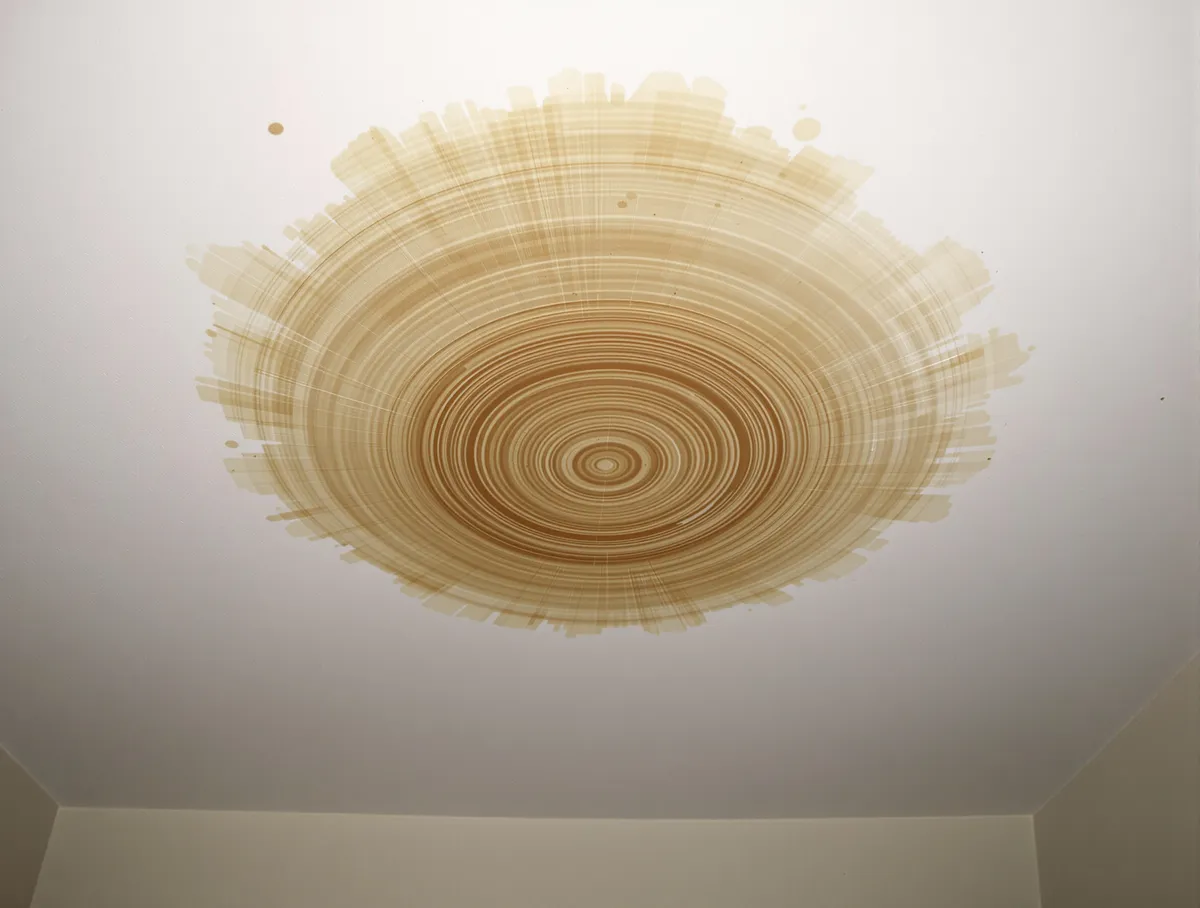
Ceiling water stains typically appear as discolored patches. They are usually brown, yellow, or tan with irregular edges. The discoloration comes from minerals and debris dissolved in the water as it travels through roofing materials, insulation, and wood framing before reaching your drywall.
The shape and color tell you something. A round or oval stain with a defined ring usually indicates a single drip point — water dripping from one spot above and spreading outward through the drywall. An elongated or streaky stain suggests water is traveling along a rafter or pipe before dripping. Multiple small stains in a line often mean water is running along a joist and dripping at each seam.
Pay attention to texture changes. Drywall that is bubbling, sagging, or feels soft to the touch has absorbed significant water. A ceiling that is actively bulging has water pooling above it. That is a different situation from a flat, dry discoloration — it means the water problem is either active or was substantial enough to saturate the material.
Location matters on Gulf Coast homes. Stains near the edges of the ceiling, around chimneys, or below roof vents are most likely roof-related. Stains directly below an upstairs bathroom are more likely plumbing. Stains in the center of a vaulted ceiling with no plumbing above are almost certainly a roof issue.
What Causes This
Here are the five most common causes of ceiling water stains, ranked by how often each is the culprit on Gulf Coast homes.
1. Active Roof Leak
The most common cause by a significant margin. A breach in the roof surface — missing shingles, cracked shingles, deteriorated underlayment — allows rainwater to penetrate into the attic space and eventually saturate the drywall below. On the Gulf Coast, where heavy downpours are routine, even a small opening can produce a large volume of water quickly.
The leak location and the stain location are often far apart. Water enters the roof at one point, runs along rafters and sheathing, and may travel 10 or 15 feet before dripping onto the ceiling. Chasing a leak from below is almost always frustrating. The stain tells you where the water ended up, not where it got in.
2. Flashing Failure
Flashing seals the joints between your roof and anything that penetrates it — chimneys, vents, skylights, dormers, and wall transitions. When flashing corrodes, cracks, or separates, water enters at the joint. On the Gulf Coast, salt air accelerates metal corrosion, making flashing failure more common in coastal areas.
Flashing leaks are sneaky. They often only leak during specific conditions — heavy rain, wind-driven rain from a particular direction, or when water volume overwhelms a partially blocked drainage path. You might go months without a leak, then get a stain during the next big storm.
3. Condensation and Attic Moisture
This cause is underestimated on the Gulf Coast. When hot, humid air enters an attic and contacts cooler surfaces, condensation forms. In a poorly ventilated attic — which is extremely common — this condensation can be substantial enough to drip onto the ceiling below and create stains identical to a roof leak.
The giveaway is timing. If the stain appears or worsens during humid weather but not specifically during rain, condensation is a likely culprit. Also check for condensation stains near bathroom exhaust fans that vent into the attic instead of through the roof — a common code violation that creates concentrated moisture problems.
4. Plumbing Issue (Not a Roof Problem)
If the stain is directly below a bathroom, kitchen, or laundry room, a plumbing leak is a real possibility. Supply line connections, drain fittings, and wax ring seals under toilets all develop leaks over time. A plumbing leak produces stains that are present regardless of weather and may worsen when specific fixtures are used.
5. Ice Dam Residual (Rare on Gulf Coast)
This is uncommon in our region but not impossible. During rare hard freezes, ice can form along roof edges and prevent meltwater from draining. The backed-up water can work under shingles and into the attic. If you have a stain that appeared after a rare freeze event, this may be the cause. It is a one-time event, not a recurring problem.
How Serious Is This?
Answer these four questions to gauge the severity of your situation. The triage tool below will give you a severity rating based on your specific circumstances.
1/4 Is the stain currently wet or growing?
2/4 Is there active dripping?
3/4 How large is the stain?
4/4 Is this a new stain or has it been there?
Severity ranges from Monitor to Urgent for ceiling stains. A small, dry, stable stain can be monitored. A large, wet, or growing stain — especially with active dripping — is urgent. The presence of a stain alone does not automatically mean you need a roofer today, but it always means you need to investigate the source.
What to Do About It
Immediate Containment
If water is actively dripping, contain it first. Place a bucket or container under the drip. If the ceiling is bulging, carefully puncture the lowest point with a screwdriver and let the water drain into a bucket. An uncontrolled ceiling collapse releases all the water at once and can damage flooring, furniture, and electronics below.
Move anything valuable away from the affected area. Water stains often expand before they stop, and secondary drips can appear near the original. Give yourself a buffer zone.
Document Everything
Take photos of the stain immediately and date them. Photograph the stain's size relative to a known object — a ruler, a phone, or a hand — so you have a clear record of its dimensions. If this turns into an insurance claim, your documentation from day one is critical. On the Gulf Coast, where storm-related claims are common, adjusters want to see a timeline.
Check again in 24 and 48 hours. Has the stain grown? Has it changed color? Is the texture different? These changes tell you whether the water intrusion is ongoing or was a one-time event.
Trace the Source
If you have attic access, go up and look. Bring a flashlight and look at the area directly above the stain. Wet insulation, water marks on rafters or sheathing, and daylight peeking through the roof are all diagnostic. Follow any water trails upward — they lead toward the entry point.
Check the exterior from the ground. Look at the roof area above the stain using binoculars. Missing or damaged shingles, displaced flashing, or damaged vents in that area are likely culprits. Do not climb on the roof — ground-level observation and attic inspection catch most problems.
Consider weather patterns. Does the stain appear only after heavy rain? Only after wind-driven rain from a specific direction? Only during humid weather with no rain? The timing pattern narrows the list of probable causes significantly.
When to Call a Professional
Call a roofing professional if any of the following are true:
- Active dripping. Water is entering your home right now. Containment buys time, but you need the source identified and addressed.
- The stain is growing. An expanding stain means the leak is active and the affected area is increasing.
- Multiple stains. Two or more stains in different locations suggest either multiple entry points or a widespread problem. This is beyond DIY diagnosis.
- The stain appeared after a storm. Storm damage often involves issues you cannot see from the ground, and insurance claims have time limits.
- You checked the attic and found wet decking or mold. Mold and saturated wood mean the problem has been happening longer than the stain suggests and requires professional assessment.
- The stain keeps coming back. Recurring stains mean the source was never properly fixed. A professional can trace the actual entry point.
You can monitor the situation yourself if: the stain is small (under 6 inches), completely dry, unchanged for weeks or months, and appeared as a one-time event you can correlate with a specific storm. Photograph it, check it monthly, and schedule an assessment when convenient.
How This Connects to Other Roof Symptoms
A ceiling water stain rarely exists in total isolation. If the source is a roof leak, there are usually other symptoms present on the exterior. Check for missing shingles, which are the most obvious entry point for water. Look for granule loss in your gutters, which indicates shingle deterioration that may have progressed to the point of allowing water through.
If you also notice a sagging roofline, the situation is more serious. Sagging combined with water stains means moisture has been compromising the roof structure for some time. That combination moves you from "schedule an assessment" to "call a professional today."
Curling shingles above a water stain are often the smoking gun. Curled edges create gaps where wind-driven rain enters. If you can see curling from the ground in the area above your stain, you have likely found your cause.
Frequently Asked Questions
- Can I just paint over a ceiling water stain?
- You can, but only after you have identified and fixed the source of the water. Painting over an active or recurring stain accomplishes nothing — the stain will bleed through again. Once the leak is fixed, use a stain-blocking primer before repainting, or the discoloration will show through regular paint.
- Does a ceiling water stain always mean my roof is leaking?
- No. While a roof leak is the most common cause, ceiling stains can also come from plumbing leaks (especially from bathrooms above), condensation from poor attic ventilation, or even HVAC condensate line overflow. The stain's location relative to bathrooms, plumbing runs, and the roof line helps narrow down the source.
- How do I tell if the stain is from a roof leak or a plumbing issue?
- Roof leak stains tend to appear or worsen during or after rain. They are often near the edges of the ceiling or below roof penetrations like vents and chimneys. Plumbing stains typically appear directly below a bathroom or kitchen, may be present regardless of weather, and sometimes have a slightly different color from dissolved minerals.
- Is one ceiling water stain a big deal?
- A single, small, dry stain that has not changed in months is low urgency. But any stain means water got in at some point, and the source may still be active. Check your attic above the stain for signs of moisture. If you find wet insulation, damp wood, or mold, the problem is ongoing even if the ceiling stain looks old.
- Should I poke a hole in a bulging ceiling stain?
- If your ceiling is visibly bulging or sagging from water weight, yes — carefully puncture it with a screwdriver and place a bucket underneath. A ceiling full of water can collapse suddenly, causing significant damage to everything below it. Controlled drainage is safer than an unexpected collapse. Do this from the edge of the bulge, not the center.
What Should You Do Right Now?
If the stain is active — wet, growing, or dripping — contain the water and call a roofer. Document the stain with dated photos. Check your attic if you can safely access it. These three steps protect your home and your ability to file an insurance claim if needed.
If the stain is dry and stable, you have time. Photograph it for your records, monitor it for changes over the next few weeks, and schedule a professional assessment at your convenience. A dry, stable stain is not an emergency — but it is a signal that something happened, and knowing what that was prevents a bigger problem later.