Curling shingles are shingles that are no longer lying flat. The edges turn upward, the centers cup downward, or both. This happens because the shingle material is shrinking, drying out, or responding to uneven heat exposure. On the Gulf Coast, where roofs endure extreme heat from above and often trapped heat from below, curling is one of the most common symptoms of an aging or overheated roof.
Curling is not an emergency, but it is not cosmetic either. Curled shingles compromise the weathertight seal that keeps water out. Every curled edge is a potential entry point for wind-driven rain. How worried you should be depends on how many shingles are affected, the type of curling you are seeing, and your roof's age.
What you'll learn
- The difference between edge curling and cupping — and why it matters
- The four causes of shingle curling, with Gulf Coast-specific factors
- How to assess severity with the triage tool below
- What you can realistically do about curling at each stage
- When curling becomes a signal that replacement is approaching
What You're Seeing
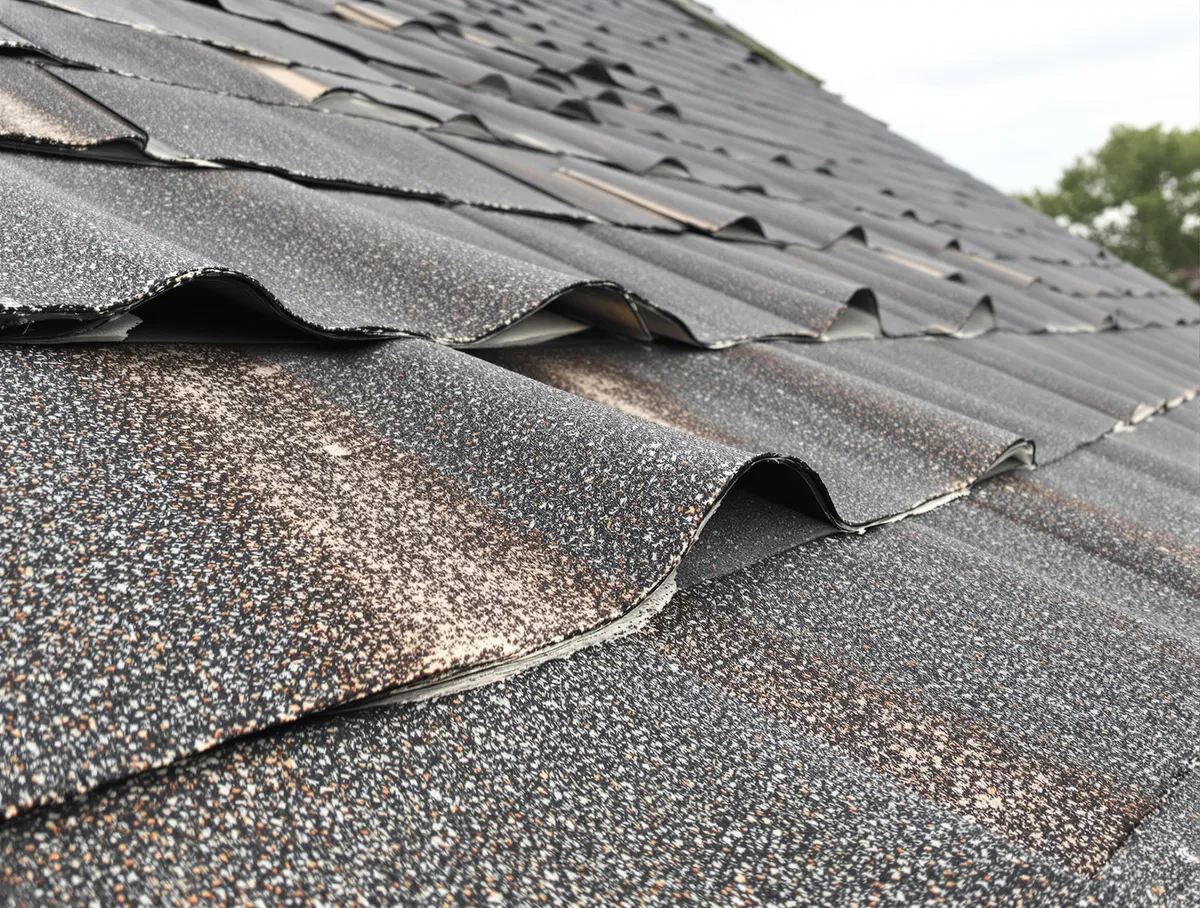
There are two distinct types of shingle distortion, and they mean different things. Understanding which type you are seeing helps narrow down the cause.
Edge Curling
The shingle edges turn upward, away from the roof surface. This is the most visible type from the ground — the shingles look like they are lifting at the borders. You will see shadows under the edges where they no longer make contact with the shingle below. Edge curling exposes the shingle overlap zone and breaks the adhesive bond that provides wind resistance.
Cupping (Center Distortion)
The center of the shingle rises while the edges stay relatively flat. This creates a concave shape, like a shallow bowl turned upside down. Cupping is caused by the bottom of the shingle absorbing moisture while the top remains dry, or by the top drying out faster than the bottom. The differential causes the material to deform.
Cupping is a stronger indicator of a ventilation problem. When the attic side of the shingle stays humid while the exterior side bakes in the sun, the uneven moisture content warps the material. If you are seeing cupping more than edge curling, attic ventilation should be the first thing you investigate.
Check which slopes are affected. Curling concentrated on south-facing and west-facing slopes — the ones that get the most direct sun — points toward heat and UV as the primary driver. Curling that is uniform across all slopes points toward attic ventilation or shingle age as the cause.
From the ground, look for a wavy or uneven texture. A healthy roof has a uniform, flat appearance. A roof with widespread curling looks textured, wavy, or rough from a distance. Individual curled shingles may be visible as lifted tabs. Use binoculars for a closer look if anything seems off.
What Causes This
1. Normal Aging
Shingles have a finite amount of flexibility-preserving oils in the asphalt. Over time, heat and UV radiation drive those oils out. The asphalt becomes brittle and shrinks. As it shrinks, the edges curl — the shingle is literally contracting. On the Gulf Coast, this process is accelerated by the intensity and duration of heat exposure.
Age-related curling is expected on roofs over 15 years old in our climate. A roof rated for 25-30 years in a moderate climate may show noticeable curling at 15-18 years on the Gulf Coast. This does not mean the shingles have failed, but it does mean they are in the second half of their life and losing the characteristics that keep them effective.
2. Poor Attic Ventilation
This is the number one cause of premature curling on the Gulf Coast. When an attic lacks adequate intake and exhaust ventilation, hot air becomes trapped. On a summer afternoon in Pensacola or Mobile, an unventilated attic can reach 160 degrees or higher. That heat transfers through the roof deck and cooks the shingles from underneath.
The shingles are being hit from both sides simultaneously. Sun beating down on top. Trapped heat radiating up from below. The asphalt dries out twice as fast, and the differential temperature between the top and bottom of the shingle causes cupping. Homes with dark-colored roofs, insufficient soffit vents, or blocked ridge vents are the most common victims.
Ventilation-related curling often appears on newer roofs, which is the frustrating part. A 10-year-old roof should not be curling. If it is, the shingles are not defective — the environment they are living in is too harsh because the heat has nowhere to go.
3. Manufacturing Defect
Some shingle batches have issues with material consistency. If the asphalt content, granule adhesion, or backing material is inconsistent, shingles from that batch may curl prematurely and uniformly. The telltale sign is widespread, even curling on a relatively young roof (under 10 years) with adequate ventilation.
Manufacturing defect claims are difficult but not impossible. You will need a professional inspection, documentation of the installation date, proof of proper ventilation, and typically a sample of the affected shingles. Major manufacturers have warranty processes for documented defects, though the process takes time.
4. Improper Installation — Double-Layered Roof
Shingles installed over an existing layer of old shingles curl faster. The old layer traps additional heat, creates an uneven surface, and adds moisture retention. Building codes in most Gulf Coast jurisdictions allow a maximum of two layers, but just because it is allowed does not mean it performs well. Double-layered roofs consistently show accelerated curling, especially on the Gulf Coast.
How Serious Is This?
Answer these three questions to assess your situation. The type of curling, its spread, and your roof's age together determine how urgently you should act.
1/3 Are shingles curling up at the edges or cupping in the middle?
2/3 How widespread is the curling?
3/3 How old is the roof?
Curling ranges from Monitor to Schedule Assessment. A few curled shingles on a 20-year-old roof are expected. Widespread curling on a roof under 10 years old is a problem that needs investigation. Cupping across the roof with no ventilation improvements planned means the deterioration will continue to accelerate.
What to Do About It
A Few Curled Shingles
These can be individually resealed. On a warm day when shingles are pliable, a roofer can apply roofing cement under the curled edge and press it flat. This is a temporary fix — it addresses the symptom, not the cause — but it can extend the life of individual shingles by a few years and reduce leak risk in the meantime.
A Section of Curling
Investigate the cause before repairing. If one slope or section is affected, the cause is likely localized — poor ventilation on that side, direct sun exposure, or a section of the old roof that was in worse condition when the new layer was installed. A roofer can assess whether spot treatment or a section replacement makes more sense.
Check attic ventilation in the affected area. Is the soffit vent blocked by insulation? Is the ridge vent clear? Is there a section of the attic that is noticeably hotter than the rest? Fixing ventilation in a specific area can slow the curling from spreading to the rest of the roof.
Widespread Curling
Start planning for replacement. When curling is widespread, the entire shingle surface is deteriorating. Spot repairs become impractical — you would be patching a roof that is failing systemically. A professional assessment will tell you how much functional life remains, which helps you plan the timing and budget for a replacement.
In the meantime, improve ventilation if possible. Even on a roof that will need replacement, better ventilation reduces the rate of deterioration. Adding soffit vents, ensuring the ridge vent is unobstructed, or installing a powered attic fan can buy additional time. This is not a fix — it is a strategy to extend the runway.
When to Call a Professional
- The roof is under 10 years old. Premature curling has a specific cause — ventilation, defect, or installation issue — that a professional can identify. Warranty coverage may apply.
- Curling is widespread across the roof. Systemic curling means systemic deterioration. A professional assessment tells you where you are on the timeline to replacement.
- You are also seeing leaks. Curling combined with ceiling water stains means the gap created by curled shingles is already letting water in. The leak source may be hard to trace without experience.
- You see cupping specifically. Cupping points to a ventilation or moisture problem that needs diagnosis, not just shingle repair.
- Shingles are cracking or breaking when curled. If curled shingles are also brittle and cracking, the material is at end-of-life. They will start detaching in the next wind event.
You can continue monitoring if: only a few shingles are affected, the roof is over 15 years old (expected aging), there are no leaks or water stains, and the curling has not progressed noticeably over the past year. Check quarterly and photograph the same areas for comparison.
How This Connects to Other Roof Symptoms
Curling shingles sit in the middle of the roof deterioration sequence. Granule loss typically precedes curling — the loss of the protective granule layer exposes the asphalt to UV, which accelerates the drying and shrinking that causes curling. If you see both granule loss and curling, you are past the early warning stage.
Curling leads to missing shingles. Once a shingle has curled and its adhesive seal is broken, it has far less wind resistance. The next strong storm will pull those compromised shingles off the roof entirely. Curling today often becomes missing shingles after the next storm.
The end of the chain is water intrusion. Gaps from curling allow rain entry, producing ceiling stains. If the water intrusion continues over time without being addressed, the structural elements of the roof can weaken, eventually contributing to a sagging roofline.
Frequently Asked Questions
- Can curling shingles be flattened or repaired?
- Individual curled shingles can sometimes be resealed with roofing cement on a warm day when the material is flexible. However, this is a temporary measure. If the curling is caused by aging or ventilation problems, the underlying condition will continue to curl other shingles. Spot sealing buys time but does not solve the root cause.
- Does curling mean my roof is leaking?
- Not necessarily, but it means your roof is more vulnerable to leaking. Curled edges and cupped centers create gaps in the shingle overlap that allow wind-driven rain to penetrate. You may not have a leak yet, but the conditions for one are present. Heavy rain with wind from the right direction will find those gaps.
- Will improving attic ventilation fix curling shingles?
- Improving ventilation can slow or prevent further curling, but it cannot reverse curling that has already occurred. Once a shingle has curled, the material has deformed permanently. Better ventilation protects the shingles that have not yet curled and extends the remaining life of the roof.
- Is curling the same as buckling?
- They are related but different. Curling happens at the shingle edges — they turn upward or downward as the material shrinks. Buckling is a visible wave or ridge in the middle of a shingle, usually caused by movement in the deck below (thermal expansion, moisture swelling) or by shingles installed over a wrinkled underlayment. Both indicate problems, but buckling often points to a deck or installation issue rather than pure aging.
- My roof is only 8 years old and the shingles are curling. What's going on?
- Curling on a roof under 10 years old is premature and has a specific cause. The most common culprit on the Gulf Coast is inadequate attic ventilation — the trapped heat cooks the shingles from below. Other possibilities include a manufacturing defect in the shingle batch or installation over an existing layer of old shingles. Have a roofer assess the ventilation situation and check for installation issues. Your workmanship warranty or the shingle manufacturer's warranty may cover this.
What Should You Do Right Now?
Look at your roof from the street and note whether the curling is isolated or widespread. Check whether the affected shingles are cupping (centers rising) or curling at the edges. Note which slopes are affected. These observations give any professional you consult the information they need to diagnose the cause quickly.
If the roof is young and the curling is premature, check your attic ventilation before assuming you need a new roof. A ventilation fix on a 10-year-old roof is far cheaper than a premature replacement and may extend the roof's life by years. If the roof is older and curling is widespread, it is time to start planning — not panicking, but planning — for what comes next.