Missing shingles mean a layer of your roof's protection is gone. How serious that is depends on three things: how many shingles are missing, what is exposed underneath them, and whether a storm caused the damage. One or two missing shingles with intact underlayment below is a straightforward repair. A large section of exposed decking is an urgent situation that needs attention before the next rainstorm.
On the Gulf Coast, missing shingles are not something you sit on. Rain is frequent, storms are intense, and wind-driven rain pushes water into openings that gravity alone would not reach. What might be a low-priority repair in an arid climate becomes a time-sensitive issue here.
What you'll learn
- What the exposed area beneath missing shingles tells you about urgency
- The four most common causes of missing shingles on Gulf Coast roofs
- How to assess your specific situation using the severity triage below
- What to do based on the number of missing shingles
- When missing shingles signal a bigger problem vs. a simple repair
What You're Seeing
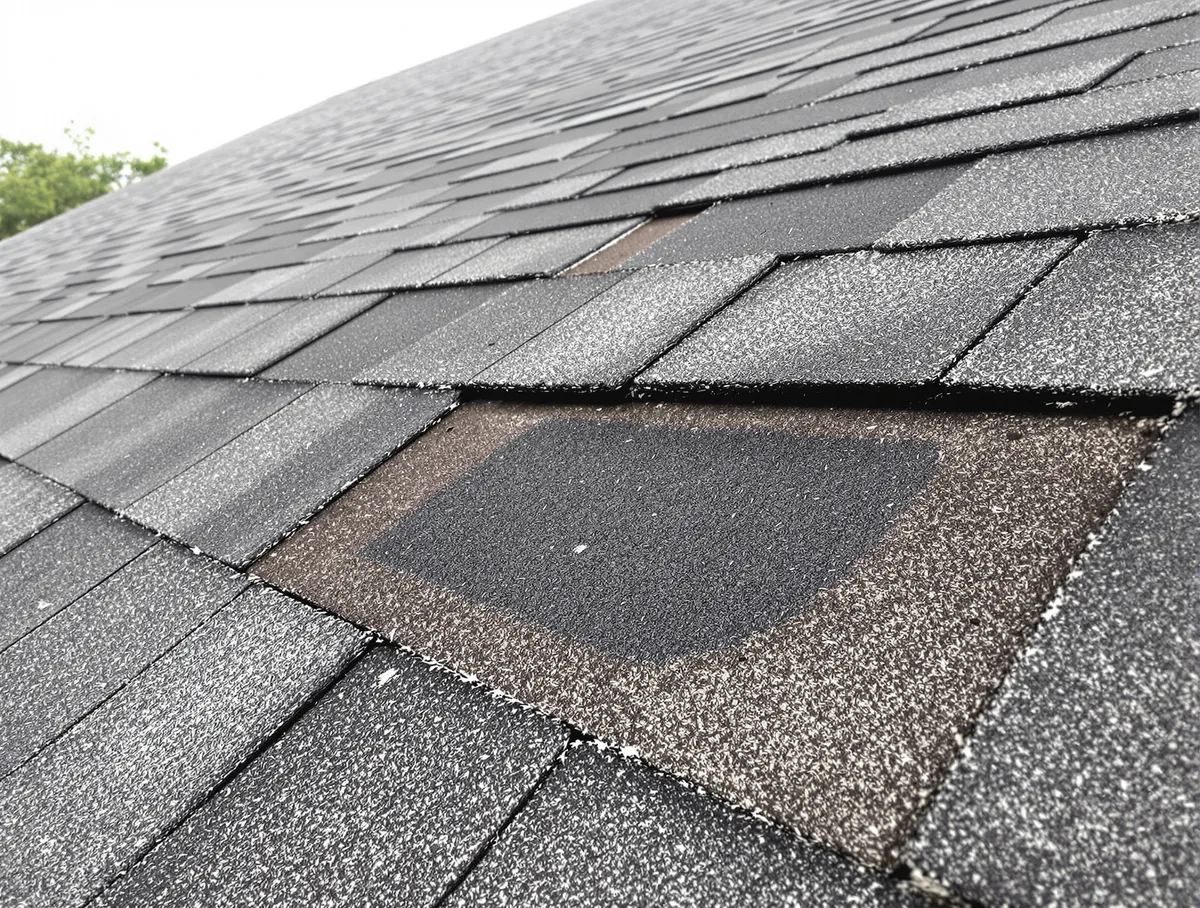
Missing shingles are usually visible from the ground. You will see gaps in the uniform surface of the roof — patches where the color changes because a different layer is exposed. You might find shingles or pieces of shingles on the ground around your home, in your yard, or in your gutters.
What you see in the gap matters more than the gap itself. The layer exposed beneath the missing shingle tells you exactly how protected your home still is. If you see black felt paper or synthetic underlayment, that is your secondary water barrier — it is working for now, but it was not designed for long-term exposure. If you see bare wood decking, your home has zero protection from the next rain at that spot.
Partial damage is common too. Shingles can crack, break in half, or lift without detaching completely. A shingle that is cracked through or flapping loose in the wind is functionally the same as a missing one — it is no longer providing the seal it was installed to create.
Check for patterns in the damage. Missing shingles concentrated along one edge or ridge line suggests wind damage — the wind peeled them starting from an edge. Random patches of missing shingles across the roof suggests age-related adhesive failure. A single missing shingle near a vent or chimney may indicate a localized flashing or installation issue.
What Causes This
1. Wind Damage
The most common cause of missing shingles on the Gulf Coast. Shingles resist wind through a combination of nail fastening and an adhesive strip that bonds each shingle to the one below it. When wind speeds exceed the shingle's rated resistance, the adhesive seal breaks first, and the nail heads pull through the shingle material.
Gulf Coast wind exposure is severe. Hurricane-force winds obviously cause shingle loss, but even a strong thunderstorm producing 60-70 mph gusts can detach shingles — especially older ones where the adhesive has weakened over time. Shingles on the windward side of the roof, along edges, and at ridge lines are most vulnerable.
Wind damage is often worse than it looks from the ground. A storm that visibly removed five shingles may have also broken the adhesive seal on fifty more. Those shingles are still in place but are no longer properly secured. They will be the first to go in the next storm. This is why a professional post-storm inspection matters.
2. Age and Adhesive Failure
Shingle adhesive degrades over time. The thermal cycle of Gulf Coast weather — extreme heat during the day, cooling at night, hundreds of times per year — eventually breaks down the bond that holds shingles to each other. When that bond fails, even moderate wind can lift and remove shingles.
If shingles are falling off without a major storm, age is the likely cause. This is particularly true for roofs approaching 15-20 years on the Gulf Coast, where the heat-humidity cycle accelerates aging. When adhesive failure starts, it typically progresses across the entire roof, not just in one spot.
3. Improper Installation
Shingles that were not nailed correctly are shingles waiting to leave. Too few nails, nails placed too high on the shingle, or nails not hitting the overlap zone all reduce wind resistance dramatically. Manufacturer specifications require nails in specific locations — miss those zones and the shingle's rated wind resistance drops from 130 mph to nearly zero.
This cause often reveals itself in the first major storm after installation. If your roof is relatively new (under 5 years) and losing shingles in moderate wind, installation error is a strong possibility. Check your warranty — both the material warranty and the contractor's workmanship warranty may apply.
4. Animal Damage
Raccoons, squirrels, and birds can damage or remove shingles. Animals looking for attic access will pull at shingle edges, tear through weakened material, or create openings around vents and other roof penetrations. This is usually localized to one area and concentrated around eaves, ridges, or near tree branches that provide access.
How Serious Is This?
Answer these three questions to assess your situation. The severity tool below will tell you how urgently you need to act.
1/3 How many shingles are missing?
2/3 What can you see where the shingles are missing?
3/3 Was there a recent storm?
The number of missing shingles matters, but what is exposed matters more. Two missing shingles exposing bare decking is more urgent than ten missing shingles where the underlayment is intact. Both need attention, but exposed decking means your next rain event will deliver water directly into your home.
What to Do About It
1-2 Missing Shingles
This is usually a straightforward repair. A qualified roofer can replace individual shingles in under an hour. Cost is typically $150-$400 depending on accessibility and material matching. If the underlayment is intact, this is not urgent but should be done within a few weeks. If decking is exposed, tarp the area and schedule the repair before the next rain.
3-10 Missing Shingles
Schedule a professional assessment this week. This level of damage needs a roofer to evaluate whether the missing shingles are the whole problem or just the visible part. The roofer should inspect surrounding shingles for broken adhesive seals and check the underlayment condition in the affected area.
If this damage is from a storm, file your insurance claim now. Document with photos showing the roof, the ground debris, and the date. Your policy likely has a reporting window — on the Gulf Coast, do not wait. Contact your insurance company and a licensed roofer within days, not weeks.
10+ Missing Shingles or Large Sections
This is urgent. Tarp exposed areas immediately if possible (without putting yourself at risk). Call a roofing contractor today. This level of damage, especially if concentrated in one area, may require a section replacement rather than individual shingle repair.
If the damage is widespread across the roof, a full replacement conversation is warranted. When shingles are failing across multiple areas simultaneously, the entire roof is at the end of its functional life. Continued spot repairs become throwing money at a failing system.
When to Call a Professional
- Bare decking is visible. Zero protection at that point. Do not wait for rain to confirm the problem.
- More than 2-3 shingles are missing. The scope of damage likely extends beyond what is visible from the ground.
- The damage occurred during a storm. Professional documentation supports your insurance claim, and hidden damage is likely.
- Shingles are detaching without storms. This indicates systemic adhesive failure. The problem will continue to spread.
- You see water stains inside. Missing shingles combined with ceiling water stains means water is already entering your home.
- Your roof is older than 15 years. Missing shingles on an aging roof are a symptom of the whole system nearing end-of-life, not an isolated event.
How This Connects to Other Roof Symptoms
Missing shingles are both a symptom and a cause of other problems. They are a symptom of wind damage, aging, or installation issues. They are a cause of water intrusion, which creates ceiling water stains and, over time, can contribute to structural sagging.
Check your gutters for granule accumulation when you notice missing shingles. Heavy granule loss suggests the remaining shingles are also deteriorating. If the missing shingles are gone because the material has become brittle and cracked — rather than being pulled off by wind — the other shingles on the roof are likely in a similar condition.
Look for curling shingles near the gaps. If the shingles adjacent to the missing ones are curling, the adhesive failure that released the missing shingles is actively affecting the survivors. Expect more shingle loss in the near future, particularly during the next wind event.
Frequently Asked Questions
- Can I replace missing shingles myself?
- Replacing one or two shingles is technically a straightforward repair. However, working on a roof is dangerous, and improper installation can void warranties or create new leak points. If you are comfortable on a roof and the damage is limited to a few shingles with intact underlayment below, a DIY repair is feasible. For anything larger, or if the decking is exposed, hire a professional.
- How quickly do I need to act when shingles are missing?
- If bare decking is exposed, act before the next rain — that is your roof's last layer of protection. If the underlayment is intact and visible, you have some time, but weeks, not months. The underlayment was not designed for extended UV exposure and will deteriorate. If the missing shingle was part of an overlapping layer and the shingle beneath is still covering the area, you have more time, but schedule a repair within a few weeks.
- Will my insurance cover missing shingles?
- If the shingles were lost due to a covered event — typically wind, hail, or storm damage — most homeowner policies will cover the repair or replacement minus your deductible. Shingles lost due to age, poor maintenance, or gradual wear are generally not covered. On the Gulf Coast, document storm damage with dated photos and file promptly. Most policies require timely reporting.
- A contractor showed up at my door saying I have missing shingles. Should I trust them?
- Be cautious with unsolicited door-knockers, especially after storms. Legitimate roofers rarely canvass neighborhoods. Get a second opinion from a roofer you choose yourself. Never sign anything on the spot, never pay more than a small deposit upfront, and verify the contractor is licensed in your state with a physical business address. Storm chasers are a real problem on the Gulf Coast.
- Do missing shingles mean I need a whole new roof?
- Not necessarily. If the missing shingles are isolated to one area and the result of a specific event like wind damage, a repair may be all you need. However, if shingles are detaching in multiple areas due to age or adhesive failure, it indicates the entire roof is approaching the end of its service life. A professional assessment can tell you which scenario you are in.
What Should You Do Right Now?
Count the missing shingles and look at what is exposed. If you can see bare wood, that area needs to be tarped or covered before rain. If underlayment is showing, you have days to weeks, not hours. Take photos from the ground — do not climb on the roof.
If this happened during a storm, photograph everything, contact your insurance company, and get a licensed roofer to inspect. Do not sign anything with a door-knocker. Choose your own contractor, verify their license, and get the full scope of damage assessed before agreeing to any work.