A sagging roofline is the most serious symptom on this site. Every other symptom we cover — water stains, missing shingles, granule loss, curling — can range from cosmetic to urgent depending on the specifics. Sagging is different. A visible sag or bow in your roofline always means something structural has been compromised. The roof framing, the decking, or both can no longer fully support the load they were designed to carry.
This is not a DIY situation under any circumstances. There is no homeowner fix for structural compromise. You need a professional — either a roofing contractor experienced with structural issues or a licensed structural engineer — to assess the cause, the extent, and the safety implications. The only question is how urgently, and the answer is: very.
What you'll learn
- What a sagging roofline means structurally and why it is always serious
- The five causes of roof sagging — with Gulf Coast-specific factors
- How to gauge whether your situation is urgent or emergency-level
- Why this is always a professional situation — no exceptions
- The connection between sagging and other symptoms you may be seeing
What You're Seeing
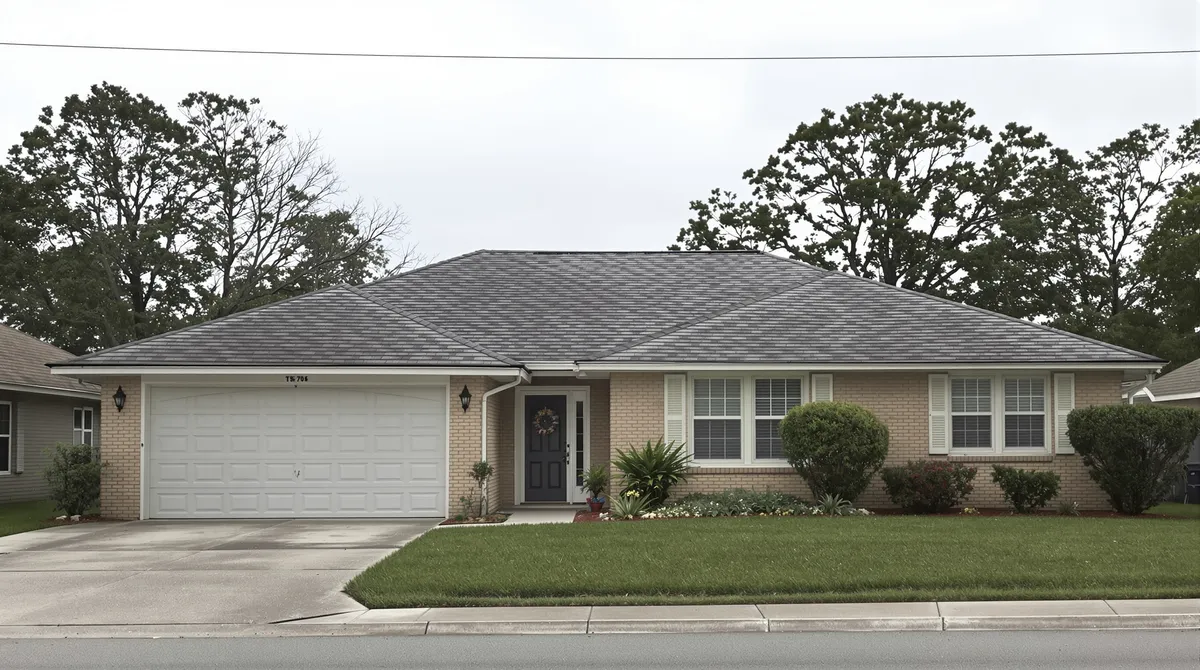
A sagging roofline appears as a visible dip, bow, or curve where the roofline should be straight. Stand across the street from your home and look at the ridge line — the peak where two slopes meet — and the edges of each slope. A straight roofline will show clean, uninterrupted lines. A sagging roof will show a visible depression, wave, or curve.
Sagging can appear in different locations, and the location matters. A sag in the ridge line means the ridge board or the top of the trusses has dropped, which is a central structural failure. A sag in the middle of a slope means the rafters or trusses in that section have deflected, which usually indicates they are overloaded or weakened. A sag along the eave (bottom edge) may indicate the rafter tails or fascia support has rotted.
Check from multiple angles. A sag that is only visible from one angle may be minor. A sag that is visible from the street, from the side, and from the back is more advanced. Inside the home, look for corresponding signs: cracks in walls or ceilings, doors or windows that no longer close properly, or visible deflection in the attic framing.
In the attic, the signs are clearer. Rafters or trusses that are bowed, cracked, or separated at connections confirm structural compromise. Decking that feels soft, spongy, or visibly sagging between rafters means the plywood or OSB sheathing has lost its structural integrity — usually from moisture. Dark stains, mold, and a musty smell in the attic often accompany structural sagging.
What Causes This
1. Water Damage to Decking and Framing
Chronic moisture is the most common cause of roof sagging on the Gulf Coast. When a roof leak goes unrepaired — or when condensation from poor ventilation persists over months or years — the wood framing and plywood decking absorb water. Wet wood weakens. Plywood delaminates. OSB swells and loses its structural properties. Over time, the compromised wood can no longer support the weight of the roofing material above it.
Gulf Coast humidity makes this worse. In a dry climate, occasional moisture exposure might dry out between events. On the Gulf Coast, where relative humidity stays above 70% for most of the year, wet wood may never fully dry. The damage accumulates faster and progresses further before becoming visible from outside.
This cause often develops gradually. A small, unnoticed leak saturates one area of decking. The decking weakens. The rafters below it absorb moisture from the decking. Over a year or two, the weakened section begins to deflect under the weight of the shingles, underlayment, and accumulated rainwater. By the time you see the sag from the ground, the damage has been developing for a long time.
2. Structural Failure of Rafters or Trusses
Rafters and trusses can fail from overload, age, or damage. Wood framing members have a rated load capacity. When the actual load exceeds that capacity — from accumulated water weight, snow (rare on the Gulf Coast but possible), or multiple roofing layers — the members deflect and eventually crack. Once a rafter cracks, the load transfers to adjacent rafters, which may then also be overloaded.
Termite damage is a real factor in our region. Subterranean termites are extremely active in the Gulf Coast climate. They can hollow out roof framing from the inside, leaving wood that looks solid from the surface but has lost most of its structural capacity. A termite-damaged rafter can fail suddenly, without the gradual warning signs of moisture damage.
3. Excessive Weight from Multiple Roofing Layers
A second layer of shingles over the first nearly doubles the roof load. Standard asphalt shingles weigh 2-4 pounds per square foot. Architectural shingles weigh more. When a new roof is installed over an existing one — a practice that was once common and is still allowed in some jurisdictions — the combined weight can exceed what the framing was designed to support, especially on older homes with lighter framing.
The extra weight is constant and cumulative. Even if the framing is technically rated for the load, the continuous stress accelerates creep — the gradual deflection of wood under sustained load. A double-layered roof on the Gulf Coast, where heavy rain adds periodic water weight, may develop visible sagging over a period of years.
4. Inadequate Original Framing
Some homes were built with undersized rafters or insufficient bracing. Older homes, additions, and homes built during rapid construction periods may have framing that does not meet current engineering standards. The roof may have been "fine" for years but was always operating close to its structural limits. Age, weather, and minor damage push it past the threshold.
On the Gulf Coast, hurricane-rated construction standards are relatively recent. Homes built before the 1990s — and especially before Hurricane Andrew's building code reforms — may lack the structural connections (hurricane straps, proper bracing) that modern construction requires. The framing may be adequate under normal conditions but vulnerable to stress accumulation over decades.
5. Foundation Settling
Not every roofline sag originates at the roof. If the foundation settles unevenly — one side of the house drops relative to the other — the entire structure shifts. This can cause the roofline to appear to sag when the actual movement is in the foundation below. Look for cracks in the foundation, uneven floors, and doors or windows that stick as confirming signs.
Gulf Coast soils can contribute to settling. The clay-heavy soils common in parts of Alabama and Mississippi expand when wet and contract when dry. This seasonal movement can cause differential settlement over time. Sandy soils in coastal Florida can also shift, especially after significant changes in drainage patterns.
How Serious Is This?
Answer these three questions. Note that for sagging, the severity range starts at Urgent. There is no "monitor" level for a sagging roofline. Every sag needs professional evaluation.
1/3 Is the sag getting worse over time?
2/3 How visible is the sag?
3/3 Are there other symptoms present?
A worsening sag combined with water stains or other symptoms is an emergency. A stable sag that has been present for years with no change is still urgent — it needs assessment — but it is not an immediate collapse risk. The worst case is a sag that appeared suddenly or is progressing visibly. If you can see a difference from week to week, do not wait.
What to Do About It
There is no DIY response to a sagging roofline. Unlike other symptoms where homeowners can take preliminary steps — containing water, documenting damage, monitoring changes — a structural issue requires professional diagnosis and professional repair. Here is what you should do.
Step 1: Stop Using the Attic
Do not store items in the attic if you suspect structural compromise. Additional weight on weakened framing accelerates the problem. If you have heavy items stored in the attic — holiday decorations, furniture, boxes — remove them. The less load on the compromised structure, the better.
Step 2: Document the Sag
Photograph the roofline from multiple angles with dates. Stand across the street and photograph the full profile. Get side views and close-ups if safely accessible. If you have older photos of your home that show the roofline, pull those for comparison. This documentation helps the professional assess whether the sag is progressing and supports any insurance claim.
Step 3: Check Inside
Look for corresponding interior signs. Cracks in drywall or plaster, especially diagonal cracks above doorframes and windows. Doors or windows that no longer close properly. Visible deflection or sagging in the attic framing. Water stains on ceilings. These interior symptoms help the professional understand the scope of the problem before they even get on the roof.
Step 4: Call a Professional
Contact a licensed roofing contractor or structural engineer this week. If the sag is worsening or you see cracking or hear sounds from the attic, call today. Describe what you are seeing — the location of the sag, how long you have noticed it, whether it is changing, and any accompanying symptoms. A good professional will prioritize a potentially structural issue.
For significant sagging, a structural engineer may be the better first call. A roofer can assess and repair roofing issues, but a structural engineer provides an engineering evaluation of the framing, load capacity, and required structural repairs. If the sag is severe or the cause is unclear, start with the engineer.
When to Call a Professional
Always. There is no scenario where a sagging roofline does not warrant professional evaluation. The only variable is how urgently.
- Call today if: the sag is worsening, you hear cracking or creaking from the attic, the sag appeared suddenly after a storm, there are accompanying leaks or water stains, or the sag is severe enough to be obvious from the street.
- Call this week if: the sag appears stable, there are no accompanying symptoms, you believe it has been present for some time, and you have no reason to believe it is actively worsening. A stable sag still needs assessment — you just have slightly more time to schedule it.
Do not wait for a convenient time. Structural problems do not improve on their own. Every storm, every heavy rain, every additional stress event on the Gulf Coast adds load to an already compromised system. The risk of delay is not just increasing repair cost — it is a safety issue for everyone under that roof.
How This Connects to Other Roof Symptoms
Sagging is the end of the road in the symptom chain. It means the damage has progressed from surface-level issues through the waterproofing layer, through the decking, and into the structural framing. It is the most expensive and most dangerous point to reach.
Ceiling water stains often precede sagging by months or years. The water that created those stains was also saturating the structural wood. If you have had water stains for a long time and now see sagging, the two are almost certainly connected. The stains were an early warning that the structural damage was developing.
Missing shingles and curling shingles are how the water got in. Compromised shingles allowed water intrusion. The intrusion damaged the decking. The damaged decking transferred stress to the framing. The framing deflected. That is the progression from a $200 shingle repair to a five-figure structural repair.
If you see sagging along with any other symptom on this site, the urgency increases. Sagging alone is urgent. Sagging combined with active leaks is an emergency. Sagging combined with multiple other symptoms means the roof system is failing at every level and requires comprehensive professional intervention.
Frequently Asked Questions
- Is a sagging roof safe to live under?
- It depends on the severity and rate of change. A slight, stable sag that has not changed in years is not an immediate danger, though it still needs professional assessment. A sag that is worsening, especially with water stains or cracking sounds, is a safety concern. When in doubt, have a structural engineer evaluate the situation. Do not assume it is safe just because it has not collapsed yet.
- Can a sagging roof be repaired, or does it have to be replaced?
- Both are possible depending on the cause and extent. If the sag is limited to a small area where decking has deteriorated, the decking can be replaced and the roof re-supported. If the structural members — rafters or trusses — are compromised, the repair is more extensive and involves sistering new lumber alongside damaged members or adding supplemental support. A full replacement is needed when the damage is widespread.
- How much does it cost to fix a sagging roof?
- Costs vary widely based on the cause and scope. Replacing rotted decking in a localized area might cost $1,000-$3,000. Structural repairs involving rafter or truss work typically range from $3,000-$10,000 or more. If the sagging requires a full roof replacement with structural work, costs can reach $15,000-$30,000 or higher. A structural assessment gives you a real number for your specific situation.
- Does homeowner insurance cover a sagging roof?
- It depends on the cause. If the sag resulted from a sudden, covered event — a tree falling on the roof, hurricane damage, or a sudden collapse from an ice or debris load — most policies cover it. If the sag developed gradually from deferred maintenance, water damage over time, or original construction defects, it is typically not covered. Check your policy and consult with your adjuster.
- I noticed a slight dip in my roofline. Should I panic?
- Not panic, but act. A slight dip is still structural compromise. The structure should be straight — any deviation means something has changed. Call a roofing professional or structural engineer for an assessment. The goal is to determine whether it is stable and what caused it, not to assume the worst. But do not ignore it or assume it will fix itself.
Do Not Wait on This
A sagging roofline is the one symptom that always requires professional attention. It is structural. It is progressive. And it directly affects the safety of everyone in your home. Stop reading and take action.
If the sag is new, worsening, or accompanied by leaks: call a roofing contractor or structural engineer today. Not tomorrow. Not next week. Today. Describe what you see and let them prioritize your situation.
If the sag appears stable and has been present for a while: schedule a professional assessment for this week. Take photos now so you have a baseline. Check your attic if you can safely access it and note any signs of moisture, mold, or deflected framing. Bring that information to the assessment.
This is not alarmism. Most of the content on this site tells you when you can relax, when you can monitor, and when a symptom is less serious than you think. This page is different. A sagging roof is the real thing, and the cost of delay — in dollars and in safety — is not worth the risk.